Gisela Simmons · 18 September 2026
Exploring Microclimate Variations and Their Impact on Gear Selection for Winter Backcountry Travel
Understanding Microclimate Variations in Winter Terrain
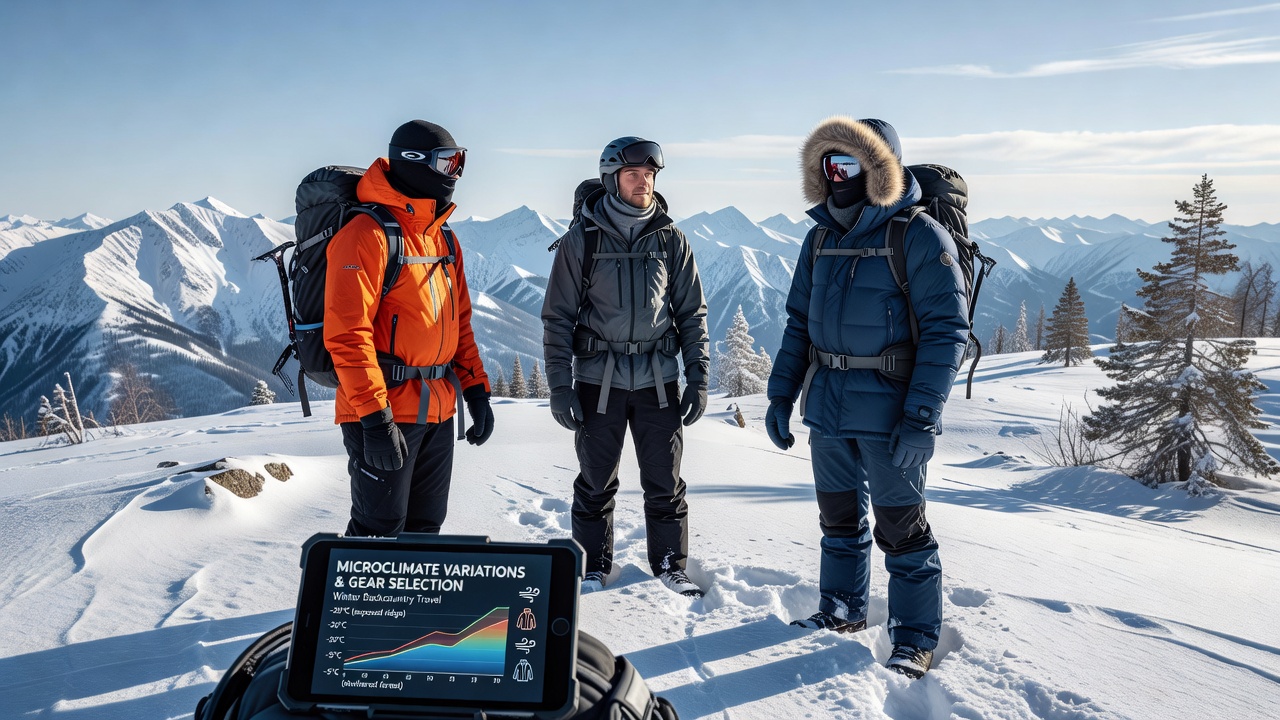
Winter backcountry environments feature microclimates that shift across short distances because elevation changes, slope aspects, and vegetation patterns create distinct pockets of temperature, humidity, and wind, while researchers from the National Oceanic and Atmospheric Administration have documented how these variations influence snowpack stability and require travelers to adjust layers, insulation, and mobility tools accordingly.
Those who study alpine regions note that a north-facing slope often holds colder air and deeper powder compared to adjacent south-facing areas that receive more solar radiation and experience earlier crust formation, and data collected over multiple seasons shows these differences can reach several degrees Celsius within a few hundred meters.
How Temperature, Wind, and Humidity Interact Across Small Scales
Wind accelerates across exposed ridges yet drops in sheltered gullies, which leads to rapid heat loss on one side of a valley and accumulation of warmer, moister air on the other, and studies conducted by the Swiss Federal Office of Meteorology and Climatology reveal that such patterns alter perceived temperature by 10 degrees or more even when official forecasts report uniform conditions for the broader region.
Observers have recorded humidity spikes near frozen streams that promote frost formation on equipment while drier air higher on the same slope keeps moisture from condensing, and this forces backcountry users to select gloves, boots, and shell fabrics that manage vapor differently depending on the precise route segment.
Snow Conditions and Their Direct Influence on Mobility Choices
Snow density and crystal structure change with exposure to sun and wind, so skiers and snowshoers encounter loose faceted snow in shaded bowls yet encounter wind-packed slabs on open plateaus, and field measurements indicate these transitions occur over distances as short as 50 meters, which directly affects ski camber selection, crampon compatibility, and boot stiffness requirements.
Travelers who plan routes through mixed terrain often carry convertible bindings or multiple layer combinations because a single setup fails to perform when crossing from cold, dry powder into warmer, wetter snow that balls up underfoot, and reports from monitoring stations confirm that September 2026 updates to remote sensing tools now provide higher-resolution maps that highlight these snow-type boundaries in advance.
Selecting Insulation, Shells, and Footwear for Variable Conditions
Layer systems must accommodate rapid temperature swings, therefore base layers with high wicking capacity pair with mid-layers that vent heat during ascents through sun-exposed chutes yet trap warmth when descending into shaded drainages, and manufacturers supply garments rated across temperature ranges that account for wind chill differences measured at ridge versus valley locations.
Boots and gaiters require attention to both insulation value and breathability because wet snow in one microclimate saturates lower legs while dry powder in another allows heat to escape through gaps, and testing by outdoor research groups demonstrates that mismatched footwear leads to cold injuries more frequently than inadequate jackets when routes cross multiple snow regimes.
Additional Equipment Adaptations and Safety Considerations
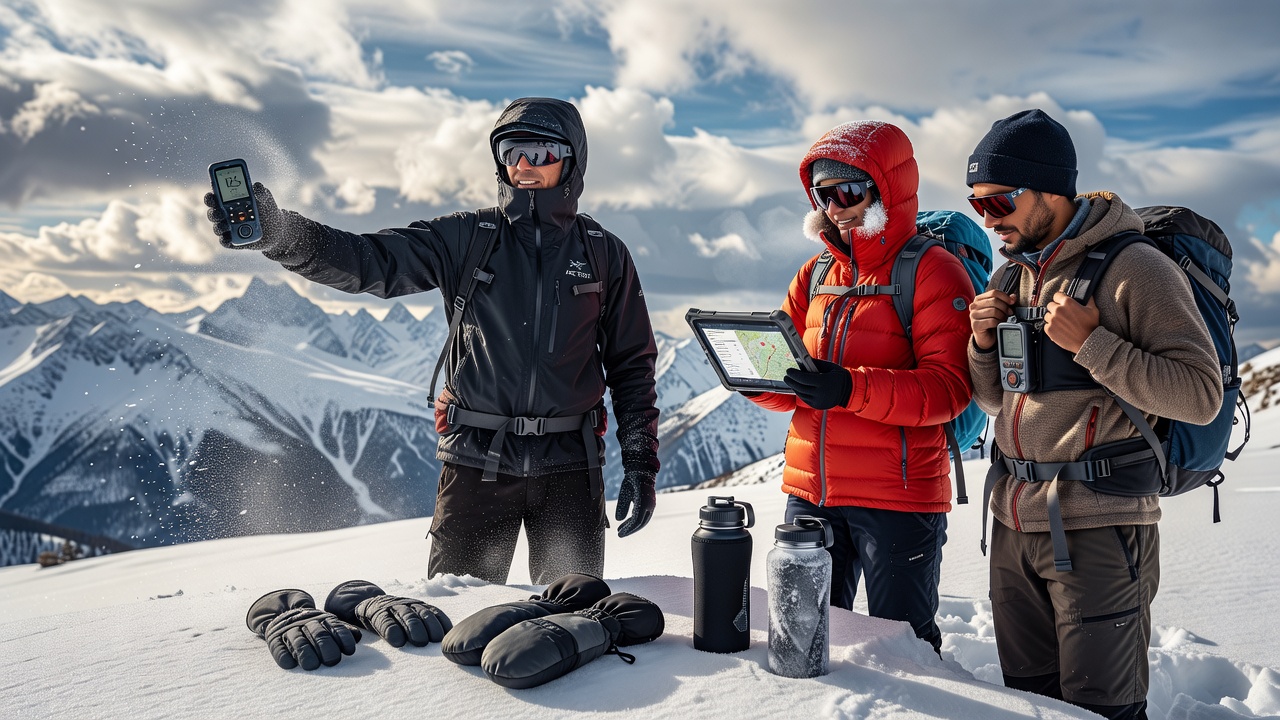
Avalanche safety tools remain essential, yet beacon, probe, and shovel choices sometimes incorporate lighter or heavier variants depending on expected snow density, while navigation devices benefit from protective cases rated for condensation risks that rise in humid microclimates near water features, and route planners integrate topographic data to anticipate where these equipment demands shift.
Groups traveling together often divide gear redundancies so one member carries extra insulation suited to colder pockets while another manages venting layers for warmer zones, and this distribution strategy reduces overall pack weight without sacrificing readiness across the varied conditions documented in winter terrain studies.
Conclusion
Microclimate variations shape every aspect of winter backcountry preparation from clothing systems to mobility aids, and ongoing data collection continues to refine how travelers anticipate and respond to these localized differences.